
As excitement builds for the next chapter in the Wizarding World, fans are eagerly anticipating insights into . With the original game setting a high bar for visual fidelity and immersive gameplay, expectations are soaring for enhanced graphics and performance. This sequel promises to leverage cutting-edge technology, including full ray-tracing capabilities, to deliver a more enchanting and realistic experience. Understanding the necessary hardware to run the game smoothly is crucial for PC players. This article explores the expected system specifications and how ray tracing will transform magical combat, spell effects, and environmental detail in the world of Hogwarts Legacy 2.
Hogwarts Legacy 2 PC Requirements and Ray-Tracing Support: What You Need to Know
The anticipation surrounding the sequel to the critically acclaimed wizarding world adventure continues to grow, especially with increasing speculation about advanced graphical features and hardware demands. As fans eagerly await official confirmation, understanding projected benchmarks based on current industry trends and existing game technology is essential. This analysis provides a comprehensive overview of what players might expect from Hogwarts Legacy 2 PC Requirements and Ray-Tracing Support, focusing on performance expectations, system recommendations, and next-gen rendering capabilities.
Expected Minimum System Specifications for Hogwarts Legacy 2
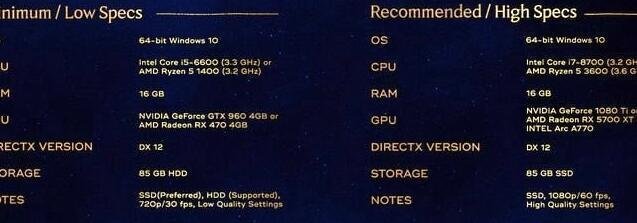
While an official release has not yet been confirmed, projections for Hogwarts Legacy 2 PC Requirements and Ray-Tracing Support suggest that the game will demand a significant upgrade from the original’s modest baseline. Drawing parallels from other AAA titles using Unreal Engine 5, the minimum requirements could include an Intel Core i5-10600K or AMD Ryzen 5 5600X CPU, 16 GB of DDR4 RAM, and a dedicated GPU such as the NVIDIA GeForce RTX 3050 or AMD Radeon RX 6600. These components would allow stable gameplay at 1080p resolution with low to medium settings. Integrated graphics and older generation processors may struggle, particularly with open-world loading and spell effects density. Players aiming to experience the full Hogwarts experience on PC should prepare for higher entry-level standards than the original title.
Recommended PC Configuration for Optimal Performance
For players seeking a seamless and immersive gameplay experience, the recommended Hogwarts Legacy 2 PC Requirements and Ray-Tracing Support are expected to align with high-end gaming rigs. A likely recommended setup may feature an Intel Core i7-12700K or AMD Ryzen 7 5800X3D processor, paired with at least 32 GB of DDR5 memory to handle complex physics, AI behavior, and environmental spell interactions. The GPU would need to support DirectX 12 Ultimate, potentially requiring an NVIDIA GeForce RTX 4070 or AMD Radeon RX 7800 XT to achieve consistent 60+ FPS at 1440p with ultra settings. Additional considerations include a PCIe 4.0 NVMe SSD with 150 GB of free space and a compatible motherboard with robust thermal management to sustain extended play sessions.
Ray-Tracing Integration and Visual Enhancements
One of the most anticipated features in Hogwarts Legacy 2 PC Requirements and Ray-Tracing Support is the potential implementation of advanced ray-tracing technology. Based on the graphical evolution seen in similar Unreal Engine 5 titles, Hogwarts Legacy 2 may utilize ray-traced lighting, reflections, and shadows to bring magical realism to spellcasting, dynamic weather, and enchanted environments. For instance, luminescent spells like Lumos could cast accurate soft shadows, while reflective surfaces in the Great Hall or Black Lake would mirror dynamic light sources with realistic clarity. To utilize these features without performance loss, players will likely need GPUs with dedicated RT cores, such as the NVIDIA RTX 40-series, ensuring real-time ray calculations do not hinder immersion.
DLSS, FSR, and Upscaling Technologies
To balance cutting-edge visuals with playable frame rates, Hogwarts Legacy 2 PC Requirements and Ray-Tracing Support are expected to include support for major upscaling technologies. NVIDIA DLSS 3 with frame generation, AMD FSR 3, and potentially Intel XeSS could be integrated to boost performance—especially when ray tracing is enabled. These AI-driven rendering techniques allow players to render at lower internal resolutions and upscale to native display output while maintaining visual fidelity. This support would be vital for mid-range systems aiming to run the game at 1440p or 4K with ray tracing toggled on. Compatibility with Reflex and Boost technologies may also improve system latency, enhancing responsiveness during intense magical duels or fast-paced traversal.
Storage, OS, and Additional Technical Considerations
Beyond processor and GPU demands, Hogwarts Legacy 2 PC Requirements and Ray-Tracing Support will necessitate attention to secondary system components. A 64-bit Windows 10 or Windows 11 operating system will likely be mandatory, along with updated drivers to support Vulkan and DirectX 12 Ultimate APIs. The game may require at least 150 GB of SSD storage due to high-resolution textures, voice files in multiple languages, and expansive world geometry. Additionally, a stable internet connection will be needed for installation, patches, and possibly online verification. It’s also plausible that the PC version will support ultra-wide monitors, high refresh rates (up to 240 Hz), and HDR rendering, enhancing both gameplay clarity and atmospheric depth.
| System Component | Minimum Requirements (Projected) | Recommended Requirements (Projected) |
| CPU | Intel Core i5-10600K / AMD Ryzen 5 5600X | Intel Core i7-12700K / AMD Ryzen 7 5800X3D |
| GPU | NVIDIA RTX 3050 / AMD RX 6600 | NVIDIA RTX 4070 / AMD RX 7800 XT |
| RAM | 16 GB DDR4 | 32 GB DDR5 |
| Storage | 150 GB NVMe SSD (PCIe 3.0) | 150 GB NVMe SSD (PCIe 4.0) |
| OS | Windows 10 64-bit | Windows 11 64-bit |
| Ray Tracing | Limited / Off | Full Support with RT Cores |
| Upscaling | FSR 3 / DLSS 3 (Quality Mode) | DLSS 3 / FSR 3 (Balanced/Performance) |
Frequently Asked Questions
What are the minimum PC requirements to run Hogwarts Legacy 2?
The minimum PC requirements for Hogwarts Legacy 2 are expected to include a modern quad-core processor, 16GB of RAM, and a dedicated graphics card such as an NVIDIA GeForce RTX 3060 or AMD Radeon RX 6700 XT. A solid-state drive (SSD) with at least 80GB of free space will likely be required for installation, along with a 64-bit version of Windows 10 or later to ensure compatibility and stable performance.
What are the recommended PC specifications for optimal performance?
For optimal performance, it is recommended to have a high-end CPU like an Intel Core i7-12700K or AMD Ryzen 7 5800X, 32GB of RAM, and a powerful GPU such as the NVIDIA GeForce RTX 4070 or AMD Radeon RX 7900 XT. Running the game on an SSD and using a 1440p or 4K display will further enhance load times and visual fidelity, especially when enabling advanced graphical features.
Will Hogwarts Legacy 2 support ray tracing on PC?
Yes, Hogwarts Legacy 2 is expected to support ray tracing on PC, delivering enhanced lighting, shadows, and reflections for a more immersive magical experience. This feature will be available on compatible RTX and RDNA2/RDNA3 GPUs, and players will be able to adjust ray-tracing settings to balance visual quality and frame rate performance based on their hardware.
Can I play Hogwarts Legacy 2 with ray tracing enabled at 60 FPS?
Achieving a stable 60 FPS with ray tracing enabled will depend on your hardware configuration, but high-end systems with an NVIDIA RTX 4080 or better should be capable of maintaining smooth performance at 1440p or 4K resolution. Utilizing technologies like DLSS 3 or FSR 3 will also help boost frame rates while preserving visual quality when ray tracing is active.
